
Dan’s apples now available
Orchard gate pick-up in Braiseworth
 Dan’s apples are available from October to the end of January, depending on the variety. 12 apples in a presentation box for £6, or a pack of 4 apples for £2, pre-payment online. The varieties currently available are Cox’s Orange Pippin, Russet, Falstaff, Ashmead’s Kernel and Conference pears. You can order from our shop at realenglishfruit.sumupstore.com
Click here for more info on Dan’s apples.
We care for trees
We are Dan and Henry Neuteboom, specialist fruit tree pruners based in Braiseworth, Suffolk. We help garden owners across the UK restore, improve and extend the life of fruit trees through expert, traditional pruning.
We don’t remove old fruit trees — we restore them. Caring for trees.
Write to us at enquiries@realenglishfruit.co.uk

We specialise in expert pruning to open up the canopy, helping your trees produce healthier, better-quality fruit. Send us an email (ideally with a photo), and we’ll provide suggestions on the right approach.
Need Advice? We’re Here to Help
If you’re unsure what your tree needs, we can help.
Email us at enquiries@realenglishfruit.co.uk with:
- A photo of the tree
- A brief description of the problem
- Your postcode (trees are site-specific)
We’ll respond with practical advice or a quote.
Why Choose Real English Fruit?
Unlike general tree surgeons, we specialise exclusively in fruit trees.
With over 65 years of combined practical experience, we understand how fruit trees grow, decline, and recover. Our work is focused on long-term tree health, productivity, and natural form.
Careful, knowledgeable pruning can:
- Extend the life of old fruit trees
- Improve fruit quality and yield
- Restore neglected or overgrown trees
- Correct poor past pruning
- Reduce disease risk naturally
Our Fruit Tree Services
We provide professional fruit tree care for gardens, orchards, and heritage trees:
- Apple tree pruning
- Pear tree pruning
- Plum and cherry tree pruning
- Restoration of overgrown fruit trees
- Restructuring neglected trees
- Improving low or irregular cropping
If you have an old, unproductive, or overgrown fruit tree, we can help bring it back into balance.

Save and Restore Old Fruit Trees
Many people assume that ageing fruit trees must be removed.
We take a different approach.
If your tree is in the later stages of its life, we can often restore its structure, improve its health, and extend its productive years.
Early intervention is key. With experience, it is often possible to identify what a tree needs before decline becomes irreversible.
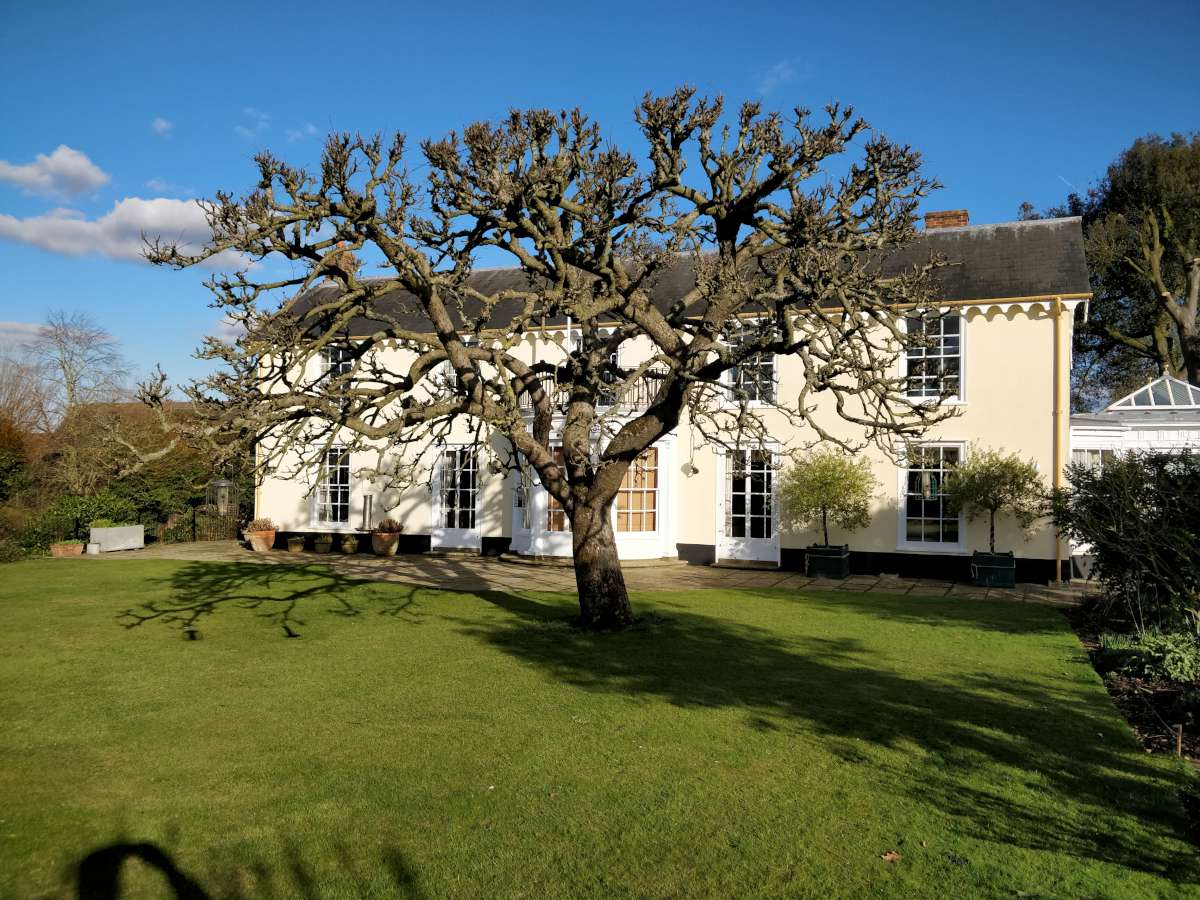
Specialist Knowledge & Experience
Dan Neuteboom trained in horticulture at Dordrecht and Wageningen in the Netherlands (1955–1959), forming the foundation of a lifelong career in fruit growing.
His knowledge combines formal training with over six decades of hands-on experience, giving Real English Fruit a depth of expertise rarely found today.

Blown-Over or Storm-Damaged Trees
A fallen fruit tree is not always lost.
We have developed methods to save and re-establish blown-over fruit trees, allowing them to continue growing and producing fruit.
If your tree has been damaged by wind or heavy rain, contact us for advice (email enquiries@realenglishfruit.co.uk) .

Fruit Tree Identification
Not sure what variety you have?
We can help identify fruit trees, although this requires:
- Photos of the tree and fruit
- Size and characteristics
- Ripening period
There are thousands of UK varieties, so accurate identification requires careful assessment.
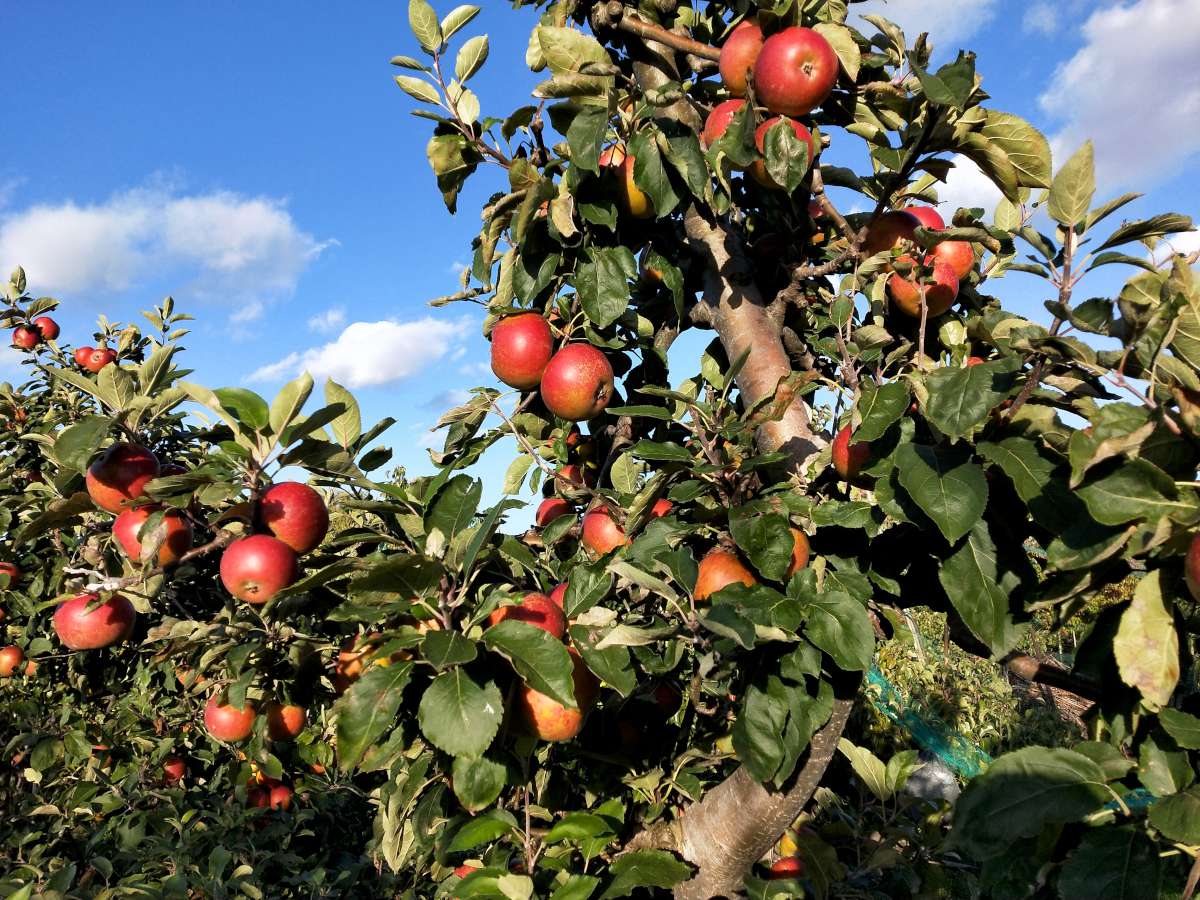
Grow Healthy Fruit Without Chemicals
We can help you improve yield and tree health naturally, without relying on chemical treatments.
Through correct pruning, structure, and care, fruit trees can:
- Produce better-quality fruit
- Resist disease more effectively
- Remain productive for longer
Seasonal Fruit Tree Care
Spring & Summer Pruning
- Improve light penetration and fruit quality
- Support healthy growth for the following year
- Restructure trees safely
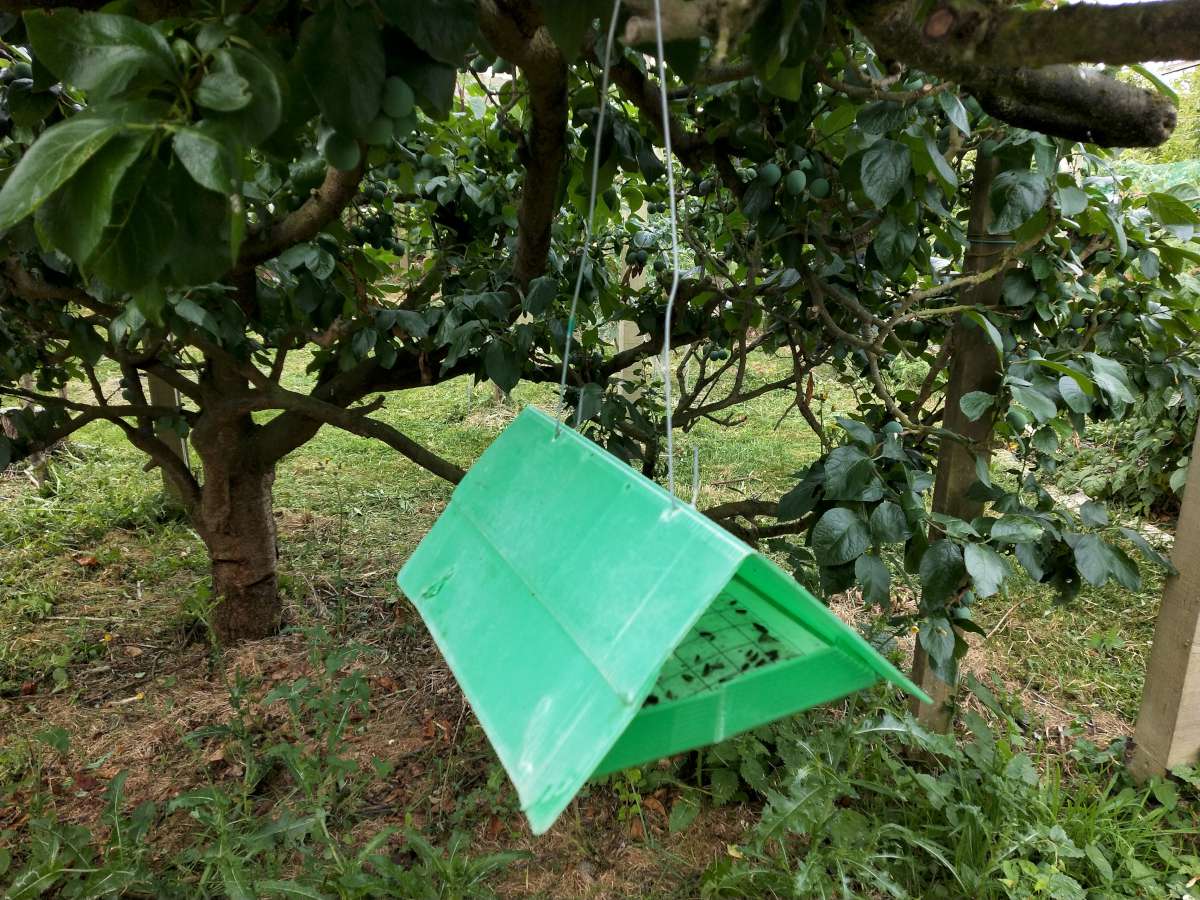
We also advise on environmentally friendly pest control, including pheromone traps for:
- Apple sawfly
- Codling moth
- Plum moth
Local Focus – Suffolk & Beyond
Based in Braiseworth, Suffolk, we work locally across East Anglia and travel across the UK for specialist fruit tree restoration projects.
Contact Real English Fruit
For expert fruit tree pruning, restoration, or advice:
📧 enquiries@realenglishfruit.co.uk
📍 Based in Suffolk – working across the UK
Send us a photo of your tree and we’ll guide you on the next steps.
Useful links
Garden orchard encyclopaedia
This website presents information on the entire spectrum of fruit trees for the garden. Click here to see the Garden Orchard Encyclopaedia index. Below are links to some of our most popular sections:
- month-by-month overview of tasks in a garden orchard
- fruit tree varieties
- how to plan a new garden orchard
- how to plant fruit trees
- how to prune fruit trees
- how to make an espalier
- how to deal with fruit tree diseases
- how to look after older trees
- how to save a blown-over tree
- thinning
- training fruit trees as espalier, fan, cordon or stepover
Fruit Tree Video Channel
The videos published on this website illustrate the critical stages of fruit development, from the period from blossom to fruit formation, in a chronological sequence throughout the year. Click here to see the videos currently available.
